Understanding the Two Paths of Document Authentication
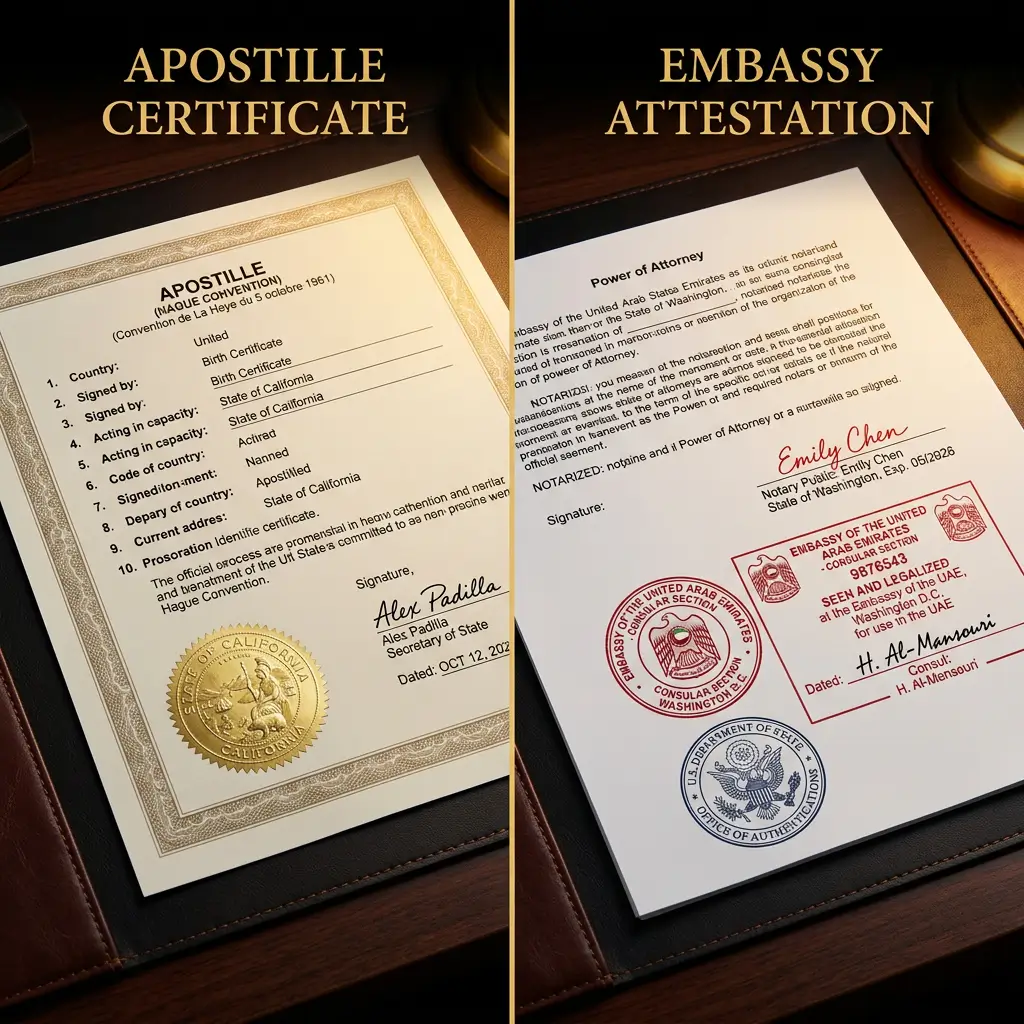
When you need to use a US-issued document in a GCC country, there are two main authentication paths: apostille and embassy attestation. Understanding the difference is crucial to getting your documents processed correctly and efficiently.
What Is an Apostille?
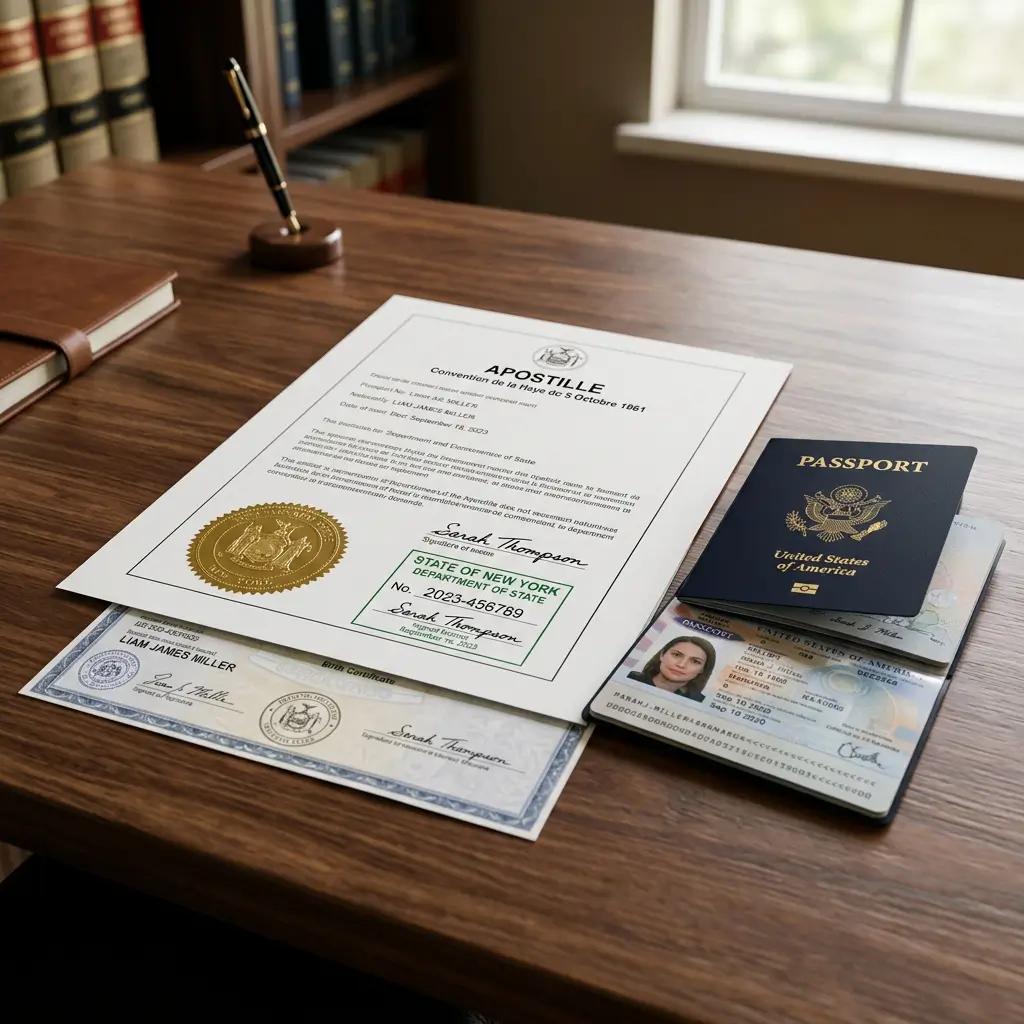
An apostille is a standardized certificate issued under the Hague Apostille Convention. It’s a simplified, single-step form of authentication that verifies the origin and authenticity of a public document. Apostilles are recognized by all countries that are members of the Hague Convention.
What Is Embassy Attestation?
Embassy attestation is a multi-step legalization process that typically involves: 1. State-level authentication or apostille 2. US Department of State authentication 3. Embassy or consulate attestation of the destination country 4. Ministry of Foreign Affairs (MOFA) attestation in the destination country
Which GCC Countries Require What?
The requirements vary by country and have evolved over time:
UAE The UAE joined the Hague Convention in 2023, simplifying the process for many documents. However, some situations may still require traditional attestation.
Saudi Arabia Saudi Arabia is not a member of the Hague Convention. Documents typically require the full embassy attestation chain.
Qatar, Kuwait, Bahrain, and Oman Each country has its own specific requirements that may include embassy attestation. Requirements are subject to change, so it’s important to verify current procedures.
How to Know Which Process Your Documents Need
The authentication path depends on three factors: – Destination country and its current treaty memberships – Document type (personal, academic, commercial, legal) – Intended use (visa application, business registration, university enrollment)
Why Professional Guidance Matters
The document authentication landscape is complex and constantly evolving. What was required last year may have changed. Working with a specialist who stays current on every country’s requirements ensures your documents are processed correctly the first time.